






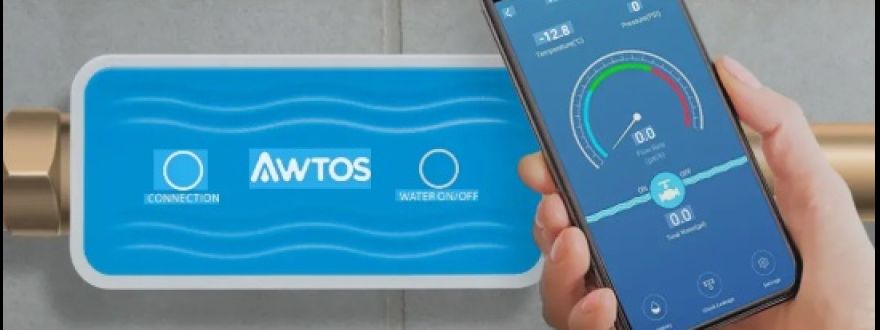
If you're insured with Orion180 — or weighing a quote with them — you may have come across mention of AWTOS, the Auto Water Turn-Off System. It's one of the more interesting carrier-sponsored programs we see at Five Bays, because it pays the homeowner back in three separate ways: a free smart water valve, removal of your non-weather water damage sublimit, and a real premium discount at renewal. Here's how the program works, what it costs, and what's required to qualify.
Key Takeaways
- Orion180 provides eligible policyholders with the AWTOS Turn-Off Valve at no cost (a $499 retail value)
- Once installation is verified, Orion180 removes your non-weather water damage sublimit and applies a 10% premium discount (capped at $150) at your next renewal
- AWTOS automatically detects leaks and shuts off your home's water supply, with monitoring through a smartphone app
- The program is available to Orion180 Insurance Company (Surplus Lines) policyholders in California and seven other states; installation must be performed by a licensed plumber at the homeowner's expense
Why non-weather water damage matters more than you'd think
If you only ever read one statistic about home insurance, this might be the one: non-weather water damage accounts for roughly one in four home insurance claims, and the average claim runs over $11,000. The damage usually doesn't come from a dramatic burst pipe — it comes from a slow leak under a sink, behind a washing machine, or inside a wall that goes unnoticed for days or weeks. By the time anyone notices, you're looking at floor replacement, drywall, and cabinets — and the longer it went undetected, the more likely your carrier will treat it as a maintenance issue rather than a covered loss (more on that below).
This matters extra for California homeowners. In our hard market, claims history isn't just an annoyance — it can determine whether you stay with your current carrier, get pushed into surplus lines, or end up on the FAIR Plan with a wraparound DIC policy. Preventing a $15,000 water claim is doubly valuable here, because the downstream cost of having that claim on your record can be just as expensive as the claim itself.
What AWTOS actually is
AWTOS is a three-part system: a smart shut-off valve, optional wireless leak sensors, and a monitoring app.
The AWTOS Turn-Off Valve installs directly on your home's main water line. It monitors water flow, pressure, and temperature in real time. When it detects something that looks like a leak, it automatically closes the valve and stops the water — no waiting on you to be home, awake, or paying attention. The valve also runs a manual leakage self-inspection on demand through the app.
The wireless leak sensors are an optional add-on. You place them in the spots where most household water damage starts: under sinks, behind toilets, near the water heater, and behind the washing machine. If a sensor gets wet, the system can trigger the main valve to shut off and send you an alert.
The AWTOS app is where the homeowner actually interacts with the system. You can see current water temperature, pressure, flow rate, and total water consumption, plus the valve's open/closed status. You set alarms for high water usage, pressure changes, and temperature fluctuations. Historical data is available, and you can share access with family members or roommates. The whole setup runs over your home Wi-Fi.
What water damage your policy actually covers (and what it doesn't)
A standard California homeowners policy doesn't cover all water damage equally. The distinction insurance companies care about is whether the loss was sudden and accidental or gradual — that's the dividing line between paid claims and denied ones.
Typically covered:
- A burst pipe
- A washing machine supply hose that fails
- A water heater that ruptures
- A toilet supply line that breaks
- A frozen pipe that bursts (assuming reasonable precautions were in place)
Typically not covered:
- A slow leak the homeowner should have noticed — most policies define this as 14 days or longer
- Gradual deterioration or normal wear and tear
- Mold and rot, which are often excluded or heavily sublimited; when adjusters find mold, they frequently reclassify the entire loss as a maintenance issue
- Damage from deferred maintenance, like an aging water heater you knew was failing
- Flood — that's a separate policy
- Sewer or drain backup, unless your policy carries the specific endorsement
This is where AWTOS earns its place. Even with the coverage upgrades the Orion180 program adds, the system's real value is preventing leaks from sitting long enough to cross the line from "sudden and accidental" into "should have known." A leak caught in the first few hours stays in the covered bucket. A leak that ran for a week behind drywall usually doesn't.
The Orion180 program: what's included
This is where the program gets unusual. Orion180 isn't just recommending AWTOS — they're substantially subsidizing it for their policyholders, because preventing a water loss is worth more to the carrier than the cost of the device. The official program page on Orion180's site is the canonical source for terms; the summary below covers the parts our clients ask about most.
Eligible Orion180 policyholders receive the AWTOS Turn-Off Valve at no cost. Retail value of the valve is $499, so that's the first piece of value out of the gate.
Once you install the device and submit proof of installation, Orion180 removes the non-weather water damage sublimit — the cap that applies to interior plumbing leaks, appliance failures, and similar non-storm-related water losses — from your policy. This is the line item most people don't realize is on their policy. Many homeowners policies cap water damage coverage well below the full dwelling limit — often at $10,000 or $25,000. Without the sublimit, water damage is covered up to your full dwelling limit, which is a meaningful difference in a serious loss. Plumbing system restrictions are also removed.
At your first renewal after AWTOS is installed and verified, you get a 10% premium discount, capped at $150. The discount applies to your renewal quote if AWTOS is in place before the renewal is generated (about 60 days before the new term). If you install later, the discount comes back to you as a refund or credit.
Optional add-ons keep their cost low. Wireless leak sensors run as little as $20 each when you order five or more. The AWTOS monitoring service through the app is a $10 monthly subscription that begins 30 days after the later of your purchase date or policy effective date.
What the program requires from you
The trade-off for all of this is that you're responsible for a few specific things on your end.
Installation by a licensed plumber. Orion180 requires this, and it's the homeowner's expense. AWTOS installs on the main water line, and a botched DIY job is one of the few ways to actually create the kind of water loss the device is meant to prevent. The installation receipt and a photo of the installation site need to be submitted to activate the program benefits.
Site requirements. Before you order, confirm your installation point has a nearby electrical outlet, sits in an interior location, has continuous Wi-Fi coverage, and uses a main water line between ½ inch and 1½ inches in diameter (which covers nearly all single-family residential plumbing).
The 30-day RFI window. After your order is placed, you'll receive a Request for Information email asking for the details needed to ship the right valve model. You have 30 days from the later of your purchase date or policy effective date to return it. Miss that window and the order cancels automatically.
The program is currently available to Orion180 Insurance Company (Surplus Lines) policyholders in California, Alabama, Florida, Massachusetts, Mississippi, North Carolina, South Carolina, and Texas.
Is AWTOS worth it for an Orion180 policyholder?
For most policyholders in qualifying states, the math works out clearly in favor of doing it. You receive a $499 valve at no charge, the non-weather water damage sublimit comes off your policy, and plumbing restrictions are lifted — all on your current policy term, as soon as installation is verified. The 10% premium discount (capped at $150) kicks in at your first renewal after installation, not immediately. Against that, you pay for a licensed plumber's installation visit (typically a few hundred dollars depending on your area and pipe configuration) plus the $10/month app subscription. Once the renewal discount lands, it often offsets close to a full year of the subscription on its own.
The harder-to-quantify value is the sublimit removal. If you have a $10,000 sublimit today and a serious water loss happens — a slab leak, a slow leak inside a wall, a failed water heater connection — the difference between $10,000 of coverage and your full dwelling limit could be tens of thousands of dollars. AWTOS is designed to prevent that loss in the first place; the sublimit removal is your protection against the device itself failing or a leak slipping past it.
If you're an Orion180 policyholder thinking about enrolling, or if you're shopping new coverage and want to understand how this fits into your policy, we're happy to walk through the specifics with you. The program details, especially the discount mechanics around your renewal timing, deserve a quick conversation rather than a guess.
Important Note
This article is for general informational purposes only. Coverage depends on the specific terms, conditions, exclusions, and endorsements in your individual policy. Insurance policies can vary significantly between carriers. This article should not be relied on for coverage interpretation or claim decisions. For questions about your specific policy, review your policy documents or speak directly with your insurance professional or carrier.